
Trouble in Paradise
The game
Your week on the island starts now
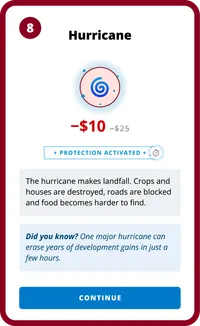
Every hurricane, drought or market shock pushes Caribbean families to the edge.
More than half of the people face food insecurity — it can take months to get ahead, but only one shock to fall behind.




 Play the game
The data
The real numbers behind this game
Good news
WFP and partners are working to support the Caribbean.
-
3.8M children
receive school meals every day in the Caribbean.
This helps secure their nutrition and future → -
22 countries
and territories supported by WFP, as well as Cuba, Dominican Republic & Haiti.
WFP supports them through our Barbados office → -
490 MT
of relief items stored and ready to dispatch across islands and territories.
Learn about CDEMA’s work →
Frequently asked questions
What is Trouble in Paradise?
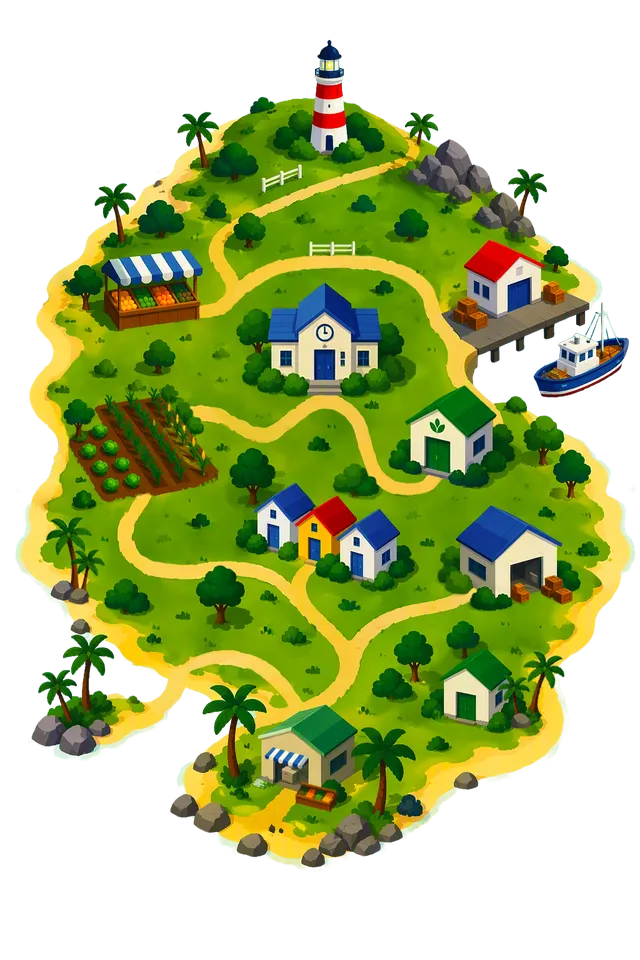
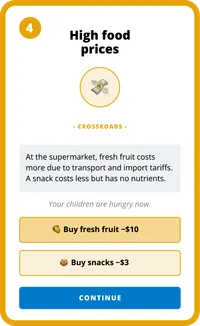
Trouble in Paradise is a free browser game from the World Food Programme FoodPrints. Step into the shoes of a Caribbean family and navigate a week of climate shocks, rising prices, and impossible choices. Discover how quickly a single setback can push a family from stability to hunger.
Is the game based on real data?
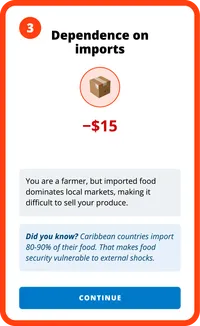
Yes. Every scenario reflects real conditions in the Caribbean: more than 23M people face food insecurity, 80–90% of the food in CARICOM countries is imported, and a single disaster can cost a Small Island Developing State more than +200% of its GDP.
Why is food insecurity so high in the Caribbean?
Caribbean nations import most of what they eat, so global price spikes hit hard, and hurricanes and droughts regularly wipe out local harvests and infrastructure. With up to 1 in 3 fruits and vegetables lost before they reach the market, even a good year leaves little surplus.
What is WFP doing to help?
WFP works alongside people and governments across 22 Small Island Developing States in the Caribbean, as well as Haiti, Cuba and the Dominican Republic, providing emergency food assistance, nutritious school meals for millions of children, and support to strengthen local food systems so communities are better prepared for the next shock.
How can I help?
Play the game to understand the stakes, share it to raise awareness, and donate to WFP to fund food assistance for families facing these choices in real life.
-
Individuals
Your generosity can help save lives. It takes a minute to help deliver life-saving food aid.
-
Private sector
Businesses, foundations and partners can turn their expertise into lasting impact worldwide.
-
Governments
WFP's principal partners that shape policy and multilateral cooperation.