Introduction
Women’s Role in the Food Chain: Their Impact on Agricultural Businesses and Strategies for Empowerment
Historically, it has been women who have borne the responsibility of ensuring that meals are provided for the family. In recent years, there has been growing acknowledgment of the significant contribution women make to food systems. The FAO (2023) highlights that roles in food processing, trading, and services account for an estimated 11-12 percent of employment for both genders. While globally, more men are engaged in agrifood systems, in sub-Saharan Africa, women represent half of the workforce in these sectors. Furthermore, according to ILO (2020), women constitute 37 percent of rural agricultural jobs worldwide and up to 48 percent in low-income countries. Notably, as economic development decreases, women tend to occupy a larger portion of agricultural employment.
In Namibia, the female agricultural population exceeds that for males in most regions (Namibia Statistics Agency, 2015) and women are responsible for subsistence agriculture, particularly in the northern and northeast regions (African Development Bank, 2006).. The transformation in food systems will happen only if issues of gender equality and women’s economic empowerment are addressed.
The food chain is gendered, even though women are at the forefront of ensuring food security and sustaining the livelihoods of their communities as agricultural producers, farm managers, processors, traders, wage workers and entrepreneurs. Issues, such as social norms, culture and tradition and poor access to assets and resources that hamper women from fully participating in the food systems must be tackled. Evidence based research shows that women’s roles tend to be marginalized, and their working conditions are worse than for men and they tend to be less engaged in higher profit cash and export commodity chains. In addition to these barriers, women also have higher burdens of unpaid care that limits their opportunities for education and employment. Women working in primary agricultural production have wages and productivity that is systematically lower than those of men and for women who work in off-farm segments of agrifood systems, their work is mostly in lower-value nodes. Evidence shows that significant costs for women and agriculture are associated with these inequalities (FAO. 2023.). Closing gender gaps in terms of access to agricultural assets, inputs and services will benefit countries and bring us closer to achieving the 2030 Agenda for Sustainable Development.
There is a significant lack of data that offers a thorough insight into the involvement of women throughout the food chain in Namibia. Although anecdotal evidence indicates that women are active participants in the food chain as producers, processors, and entrepreneurs, more robust evidence regarding gender dynamics within food systems is essential.
Even when it comes to the hospitality sector, where one would think that more women than men participate, given the traditional perceptions and beliefs that cooking is for women, this is not the case. According to an analysis of 2286 Michelin-starred restaurants across 16 countries, as well as the top 100 restaurants in the world ranked by The World’s 50 Best group, female chefs remain sorely underrepresented in leading culinary roles (Chef’s Pencil, 2023). The need to advocate strongly for gender equality in all spaces, including in restaurants is crucial. The lobbying by feminists in early years could have been what drove women out of the kitchens to emancipate women from the drudgery of household chores, including cooking. However, the realization is that cheffing is a profession, which men have embraced, and women are once again left behind.
The goal of this cookbook is to recognise and celebrate the crucial contribution women make as an integral part of the food system. By sharing their recipes, which are steeped in history and tradition while brimming with creativity and skill, these women have not only provided nutritious meals for their families and communities but have also fostered a strong sense of identity.
1. Namibia Statistics Agency, 2019. “Namibia Census of Agriculture 2013/2014: Communal Sector, Revised Report 2019.” Available at Namibia_Census_of_Agriculture_2013_14_Revised_Report.pdf (nsa.org.na)
2. African Development Bank, 2006. Republic of Namibia Country Gender Profile. Abidjan.
3. FAO, International Fund for Agricultural Development (IFAD) & World Food Programme (WFP). 2022. Guide to formulating gendered social norms indicators in the context of food security and nutrition. Rome. https://doi.org/10.4060/cc0673en
4. Closing the gender gap in farm productivity and the wage gap in agrifood systems would increase global gross domestic product by 1 percent (or nearly USD 1 trillion).
5. Restaurant (2022, July 20). Just 6% of the world’s top restaurants are led by women, study finds. Just 6% of the world's top restaurants are led by women, study by Chef's Pencil shows (restaurantonline.co.uk)
6. Closing the gender gap in farm productivity and the wage gap in agrifood systems would increase global gross domestic product by 1 percent (or nearly USD 1 trillion).
7. Restaurant (2022, July 20). Just 6% of the world’s top restaurants are led by women, study finds.(restaurantonline.co.uk)
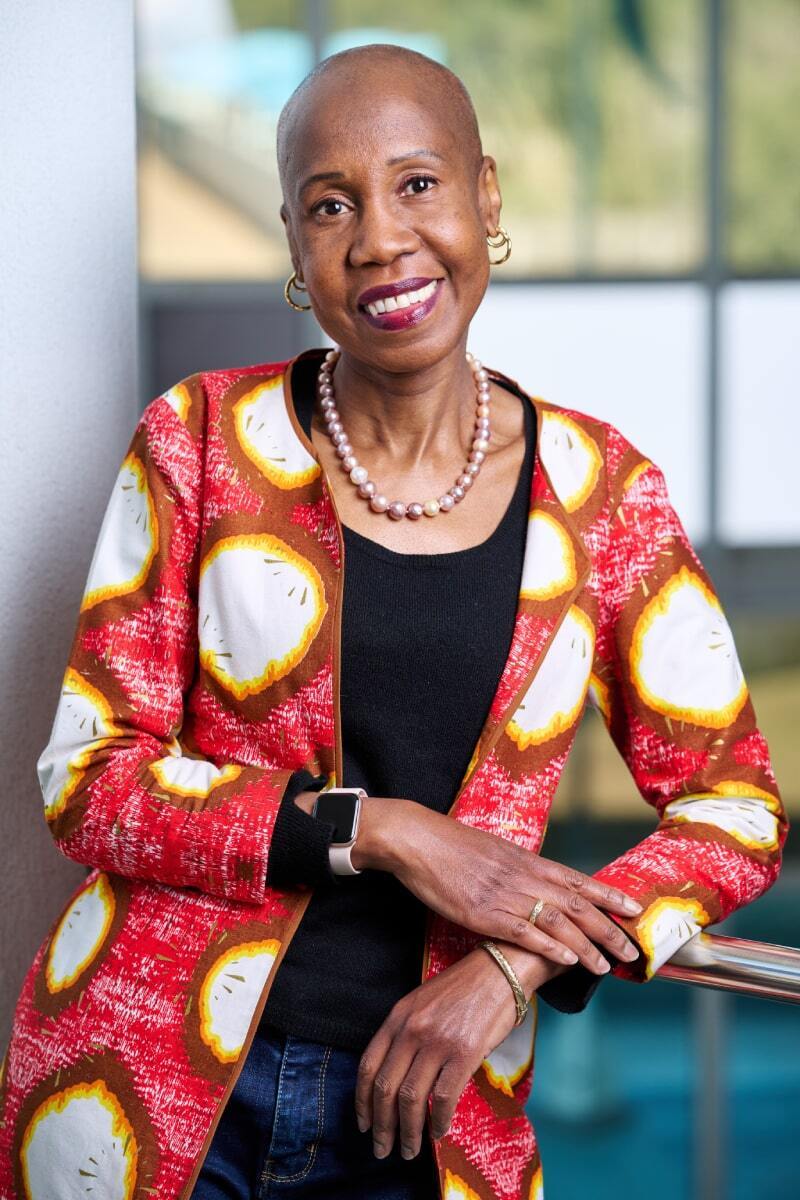
The Ingredients of Gratitude
Gratitude goes to the Namibian University of Science and Technology (NUST) Hotel School for their dedication in testing and refining the recipes to ensure quality and rigor. Special thanks to Chef Ralf Herrgott and the six students—Lucky, Elizabeth, Tracy, Nelly, Nnuku, and Lerischia—for their commitment and expertise.
Appreciation is extended to the women who contributed their recipes and articles, sharing their knowledge and traditions. Recognition also goes to those who contributed but could not be featured—their efforts remain invaluable.
The Namibia Tourism Board generously shared stunning photos and videos of Namibia, which we have included in this book to inspire you to explore the country through the power of food tourism.
Thanks to the World Food Programme (WFP) team:
- Iyaloo
- Rawan
- Luise
- Theodor
- Sem
- Fabio
- Paul
- Beatha
- Annatjie
- Eline
- Charline
- Mario
- Nikita
- Tiwonge
- Naouar
- Jafeth
- Ndaindila
for their support and dedication to promoting nutrition and food security through this creative project.
This book is a testament to the power of community, culture, and shared passion for food.
-min.jpg)
-min.jpg)